Sunday, November 30, 2014

Blog 9- The Marketing Mix During the Holiday Season


        Tis’ the season to be holiday shopping.  With the holiday season fast approaching, many people will be heading to they’re nearest shopping malls or browsing online shopping sites to find the perfect gift for their friends and family members.  Therefore, the holiday season is the perfect time for marketers to get the word out about their products in hopes that they will cash in big with all the holiday shopping that will take place within the next month. 

            For the holiday season, marketers tend to make adjustments to their marketing mix, many times spending more time and money on marketing their products and coming up with incentives to get people to buy their products as a Christmas gift.   The marketing strategies start with Black Friday and Cyber Monday.  Black Friday takes place the day after Thanksgiving where companies will offer huge discounts on their products only on that one-day.  Therefore consumers will buy a mass amount of their product on that one-day where the price of their products is significantly lower than usual.  The following Monday marks Cyber Monday where companies offer discount prices online so people have the opportunity to get discounts on products online, since many people may not want to wake up at the crack of dawn on Black Friday to go shopping and have to deal with the huge crowds. 
            Black Friday and Cyber Monday may be the day for companies to make the highest amount of sales on their products however in order to sustain successful sales and profit throughout the holiday season, companies will offer sales on their products right up until New Years Day.  For many companies, it is very important to have sales on their products to give consumers an extra incentive to want to buy their brand.  I think of all the different clothing companies during the holiday season and how they will want to make efforts to offer sales on items that will stand out in the minds of consumers.  Car companies offer many discounts as well like Lexus’s December to Remember sales event, which offers top discounts of the year on all Lexus vehicles.
            Along with the Christmas and New Years sales that go on during the holiday season comes the endless advertisements for products and brands.  Many companies will add extra promotion to their marketing plan during the holiday season to get the word out to Christmas shoppers about their products.  Almost all of the holiday discounts companies offer has many commercials to promote their big sales.  Even if companies aren’t offering sales, they will still often times spend more on marketing to promote their products during the holiday season.  Christmas time is also a great opportunity for companies to release new products since it is a time where consumers are more likely to purchase a hot new product on the market.  Therefore the holiday season is a great time to test out how successful a new product could be. 
            The holiday season is the last opportunity for the year that companies have to make big sales on their products.  Since it is a time of big spending for consumers, marketers make sure to do all they can to get their product added to your Christmas list. 
           

Blog 8- Is the Price Right?

Many people relate successful marketing campaigns with funny advertisements and memorable promotion techniques.  Through funny advertisements are great for a marketing campaign, a good pricing strategy is essential for a company to be successful and make a profit on their product or service.   There are many strategies marketers can use to come to a final price.  Two very common ways to go about a pricing strategy for companies is through demand-oriented approaches or cost- oriented approaches. 
Demand- oriented pricing strategies examine what consumers tastes and preferences are and coming up with a price that will satisfy those tastes and preferences.  One pricing strategy many marketers use is price skimming.  Price skimming is when a company will set an initial high on the product because of the fact that customers are still willing to pay a high price.  That is why many times when a new product hits the market; the company will set the price high cause consumers still want to buy the product no matter what.  One example is the PS4 and the X-Box One.  Since these are still fairly new gaming consuls and the demand for them is very high right now, they are able set PS4’s and X-Box One’s at a high price because despite these products being expensive, consumers still want it.  Another pricing strategy marketer’s use is penetration pricing.  Penetration pricing is a strategy of setting a low initial price on a product to get consumers to want to but their product.  One corporation who uses penetration pricing on all their products is Wall-Mart.  Wall-Mart’s low prices gives consumers an incentive to want to go to a Wall-Mart and score big on a bunch of products for very cheap.  A third demand-oriented pricing strategy that is used frequently with luxury products is prestige pricing.  Prestige pricing is a strategy of setting a high price on a product to attract consumers who desire the highest quality product available on the market.  One example of prestige pricing is Rolex and how their watches are very expensive yet consumers who are status- =conscious will still be willing to purchase their watches because they know they have the most expensive and high quality watch a consumer can get. 
Cost-oriented pricing strategies are concerned with production and marketing costs of a corporation and making sure the final price that is set will cover expenses, overhead, and profit.  An example of a cost- orientated pricing strategy is standard markup pricing.  Standard markup pricing entails adding a fixed percentage to all products in order to ensure a profit gain.  An example of corporations that would use standard markup pricing are grocery stores.  Since grocery stores have so many products they cannot determine the demand for all the products they have.  Therefore by putting a fixed percentage on all the products in a grocery store profit will be made. 

The main goal for any corporation is to gain profit and come out on top against competitors in the market.  Therefore coming up with a successful pricing strategy is one of the best ways to ensure those goals.  However coming up with the perfect price isn’t always easy.  I have found that in our practice marketing simulation, coming up with a price for our backpack has been one of the hardest decisions our company has had to make.  However when a company arrives at the perfect price, it can make all the difference and will result in a successful and profitable product or service. 

Sunday, November 2, 2014

Blog 7: Repositioning a Product

In our marketing class we have been talking a lot about the repositioning of products in the market place.  Product repositioning changes the place a product occupies in a consumers mind relative to competitive products.  Many times in order to keep a product successful in the marketplace, a company will need to make a changing one or more of the four marketing mix elements.  Many times it involves finding a new target market or finding a way to better suite consumer needs.  The four main factors for repositioning a product are reacting to a competitor's position, reaching a new market, catching a rising trend, and changing the value offered.
Reacting to a competitors position involves a company changing the style of their product to find new target markets as a result of competition in the market.  Our marketing book uses an example of how New Balance were having trouble competing with Nike and Adidas in their style of athletic shoes. Therefore New Balance repositioned their product to focus on fit, durability, and comfort for their sneakers; separating them from Nike and Adidas's style of shoes.
Reaching a new market involves a company changing part of its product and placing it in a new market.  If a company is not having success in a particular market, they may decide to change a feature of its product to have better success in a new market.  The book uses the example of Unilever introducing a brand of iced tea in Britain that did poorly in sales. Therefore the company decided to make the tea carbonated which repositioned the brand as a soft drink, which resulted in improved sales.
Company's will also reposition their products in a response to consumer trends.  One major consumer trend currently going on are consumers desire for healthy food and drink options. This trend has been a big struggle for fast food companies like McDonalds, who are seeing their sales drastically decreasing.  Therefore McDonalds will need to figure out a way to reposition it's product to meet consumer demands.  In response to the trend of healthy food and drink options, Coca-Cola recently came up with a new brand of Coke called Coca-Cola Life that is made with cane sugar and and stevia-leaf extract, which targets consumers looking for a soda that has reduced calories and is made with natural ingredients.  Cape-Cod chips is another example of company that offers reduced fat options for their chips to appeal to consumers looking for low-fat options.
Companies can also change the value of their product when repositioning.  Trading up involves adding value to the product through additional features or high-quality materials. An example of trading up would be Macy's adding designer clothing lines such as Polo and Lacoste to their department stores.  Companies can also trade down which involves reducing the number of features, quality, or price. The book uses an example of how airlines have added more seats on their planes, which reduces legroom and limited snack services.

Blog 6-Marketing in Movies

Many reasons why movies are so successful are how effectively they are marketed and promoted to the public.  Every major Hollywood studio has a department that is entirely dedicated promotion for new movies being released mostly through advertisement.  These advertising campaigns include theatrical movie trailers, Internet advertisements, and billboards. The effectiveness of an advertisement campaign for a new Hollywood movie can determine how successful the movie becomes and how much profit they make.
One of the first marketing strategies a movie goes about is when they release it.  Many movies tend to come out during the summertime or holiday seasons since it is the most popular time for people to be going to the movies.  For major studio movies there is also a lot of pressure to make big money on it's opening weekend release. Many Hollywood studios will make 40 percent of their gross profits on the first week of release.  This importance to do well during a movie's opening week can relate back to our practice marketing groups. Our sales were the highest during our first week selling backpacks and has since declined. Therefore it was important that our backpacks sold well in the first week.
Many times a movies marketing strategy will first start with the opening trailer. The trailer is a way to spark interest in the moviegoer and to give a good idea of what the movie will be about.  After the trailer is released and buzz about the movie begins to stir, movie marketers begin to try and get press coverage to help further promote the movie. The main movie publicity tactic is to have journalists, reporters, and movie critics come to a special location to interview the cast and creators of the upcoming film.  Weeks before the movie is released, the promotion departments will do as much as they can to get as many advertisements and commercials out to the public to get people excited about the movie.  A lot of times advertisements for movies will also be placed on products such as bottles of Coca-Cola or a bag of Doritos.
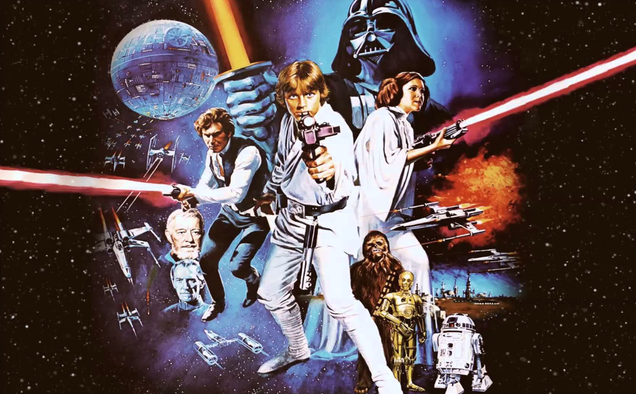
There have been several movies that have had massive success thanks to great marketing campaigns.  The Harry Potter Series are movies that stand out to me.  The Harry Potter movie series is the highest grossing film franchise of all time grossing over 7.7 billion dollars worldwide.  By releasing all of the Harry Potter movies either during the summer time of the holiday season definitely helped bring a greater popularity to the movie franchise as well as many effective advertising campaigns.  The success of the Harry Potter has allowed the franchise to expand into other markets by creating Harry Potter merchandise, apparel, toys, video games, and much more.  Harry Potter also now has its own amusement park at Universal Studios called Harry Potter World.   The Star Wars movies are another example of a successful movie franchise that has been very successful in expanding into other markets.  Overall marketing and promotion is an extremely important part of the success behind a great Hollywood film.

Helpful links:

http://entertainment.howstuffworks.com/movie-marketing2.htm

http://en.wikipedia.org/wiki/Harry_Potter_(film_series)

Sunday, October 19, 2014

Blog 5- Product Classification and The New-Product Process


            Chapter 10 of our marketing book discusses developing new products and services.  It first discusses the many different kinds of products that are available in the market.  There are convenience products, shopping products, specialty products, and unsought products.  Convenience products are items that a consumer purchases frequently without considering the brand or price such as milk or shampoo.   Shopping products are items consumers compare different alternatives and prices before making a decision such as shoes or cloths.  Specialty products are items that consumers make a special effort in making a purchase such as a car.  Unsought products are products that consumers do not initially want.  Each product has very different marketing mix characteristics.  For example convenience products can be found at a large variety of stores and outlets, but specialty products can only be found in very selective and limited outlets.  Products are also classified in to consumer products and business products.  For example a product like a computer can be viewed as a consumer product for someone buying it for personal use or it can be viewed as a business product when companies buy computers for their office. 


The next main theme of the chapter talks about coming up with a new product.  It is very difficult to come up with a new product that will be successful and be able to compete with similar products in the same market.    That is why in a new product or service needs a protocol, which is a statement that identifies a well-designed target market, specific customers needs and preferences; and how the product will satisfy customers. 

            New products also go through what is called the new-product process, which are the seven stages an organization goes through to identify business opportunities and convert them into salable products.  The first step in the new-product process is new product strategy development, which are the firms overall objectives for the product.  It takes SWOT analysis and environmental scanning into consideration.  The second stage is idea generation, which involves developing various ideas and concepts for new products.  New ideas can be generated though company research and development laboratories or by asking feedback from customers or suppliers.  The third stage is screening and evaluation.  This stage is where a firm internally and externally evaluates new products and eliminates ones that have no further use. Stage 4 is business analysis, which discusses the features of the product and the marketing strategy needed to bring it to the market and make financial projections.  Business analysis looks at how the product or service will do in the market along with how costly the product will be to make.  Stage 5 is the development stage, which turns the idea for the product into an actual prototype.  Stage 6 of the new-product process is market testing which exposes the product to prospective consumers.  The seventh and final step is commercialization, which launches a new product into full-scale production in the market.  Overall companies spend a lot of time and effort into coming up with products that will hopefully become successful in the market place. 

Blog 4- Market Segmentation


One marketing topic that we have recently been discussing in our marketing class is market segmentation.  Market segmentation involves aggregating prospective buyers into groups that have common needs and will respond similarly to marketing actions.  This allows companies to take a large target market and break it down into smaller ones and create products that specifically fit that specific target.  Market segmentation is necessary for companies for the reason that is too challenging to target your products to everyone. 
            Market segmentation is usually divided into demographic, geographic, physiographic, and behavioral segmentations.  Demographic segmentation focuses on targeting to different ages, races, and genders.  Geographic segmentation targets people who live in certain locations such as suburban, rural, or urban areas.  Physiographic segmentation focuses on targeting consumers that share similar interests and lifestyles.  Behavioral segmentation works to figure how different consumers perceive their product and how often or little they wish to use that product. 
            There are many examples of companies that use market segmentation.  Most car companies use market segmentation by designing different models of cars to reach different target markets.  Chevrolet is one example of a car company that has many buying options for different market segments.  Chevy has SUV’s that target families in suburban areas, they have sports cars to target upper class consumers, and they also have smaller fuel-efficient models to target middle income consumers.   Chevy pick-up trucks are also very popular and does a good job at targeting consumers who live a more rugged lifestyle and live in geographic location where trucks would be needed to drive through serious weather conditions. 
            In the clothing industry, market segmentation is very important in order to reach multiple target markets.  Demographics are a big focus in segmenting markets.  Most clothing companies sell cloths that are both for men and women as well as children and adults.   Clothing companies also need to consider different lifestyles of consumers.  For example, The North Face is a clothing company that sells a wide variety of winter jackets and outdoor apparel that fit the needs of many different consumers.  North Face has jackets that are designed to withstand extremely cold weather for consumers that enjoy skiing and need a warm jacket.  They also make jackets that are more casual for consumers that are looking for a jacket that will keep them warm but might not necessarily need a heavy ski jacket. 
            Market segmentation is an extremely important part of marketing and is crucial in having a successful product.  It is something that our groups for practice marketing are doing when designing our backpacks.  Our group’s goal is to target university students with an environmentally friendly backpack that will meet there needs in a backpack at an affordable price.  We have also been trying to come up with ways to reach our market segment by figuring out the best places to sell our product as well as how to promote.  Market segmentation will be a very vital concept to have moving forward.